Development
Oct 22, 2025 06:37 PM
Patrick Kachere
Lilongwe Water Board intensifies efforts to improve water supply and service delivery
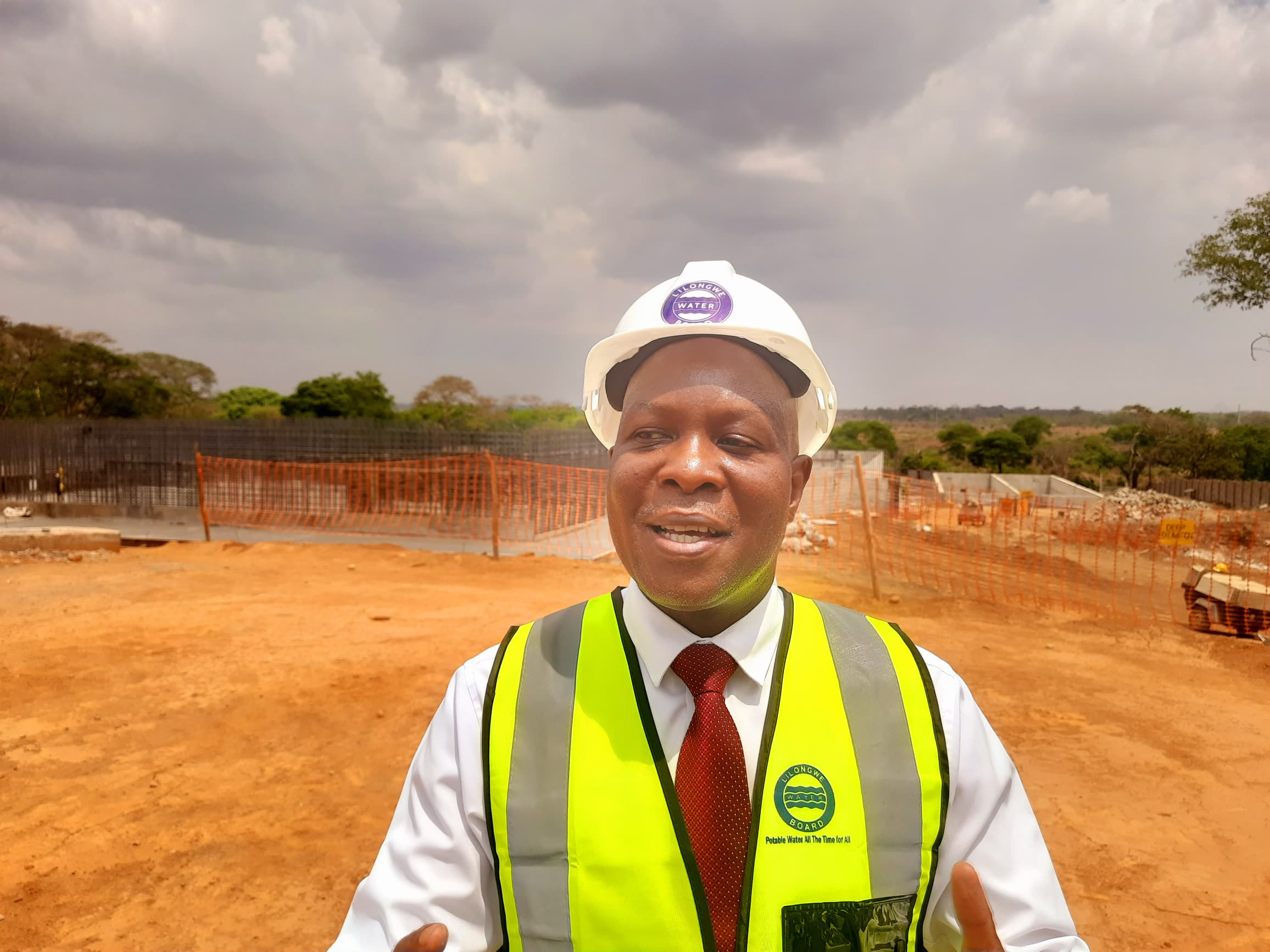
The Lilongwe Water Board (LWB) says it has intensified efforts to ensure the provision of high-quality potable water by implementing several interventions aimed at improving customer service delivery and addressing existing gaps in the system.
The remarks were made on Wednesday during a media inspection tour at one of the sites where construction of the new water treatment plant is underway in Area 3, Lilongwe.
Speaking during the tour, LWB Chief Executive Officer Silli Mbewe said the Board has put in place immediate, medium, and long-term interventions to enhance water service delivery in line with its strategic plan, including infrastructure rehabilitation, system upgrades, and capacity expansion initiatives among others.
Mbewe further revealed that LWB has secured a financing agreement worth 20 million euros from the European Investment Bank to strengthen the Board’s hydraulic capacity and invest in renewable energy solutions to address power challenges affecting water production.
He also disclosed the progress made in reducing non-revenue water and curbing illegal connections, which are among the strategic pillars of LWB’s ongoing reforms.
“We have managed to reduce non-revenue water from 44 percent to 32 percent, and plans are underway to further minimize losses through the replacement of old pipes and other efficiency measures,” said Mbewe.
On his part, Dan Kafuka, Zone Manager for the Southern Zone, said the Treatment Works 3 project will significantly increase the Board’s production capacity as currently the project is at 70 percent completion and is expected to be finalized by March and handed over by May 2026.
He, however, expressed concern over the negative impact of human activities on water sources, saying that LWB relies heavily on Kamuzu Dam 1 in Malingunde which is located over 20 kilometers from the treatment site.
“These activities compromise water quality, and we are engaging communities to promote conservation and sustainable practices within the catchment area,” said Kafuka.
Currently, the combined production capacity of LWB’s two treatment plants stands at 125,000 cubic metres per day, against a growing demand of between 151,000 and 172,000 cubic metres per day, leaving a production deficit that the ongoing projects seek to address.
Tags:
#user feedback
Share on: